Brick Pavers That Complement Traditional and Modern Homes
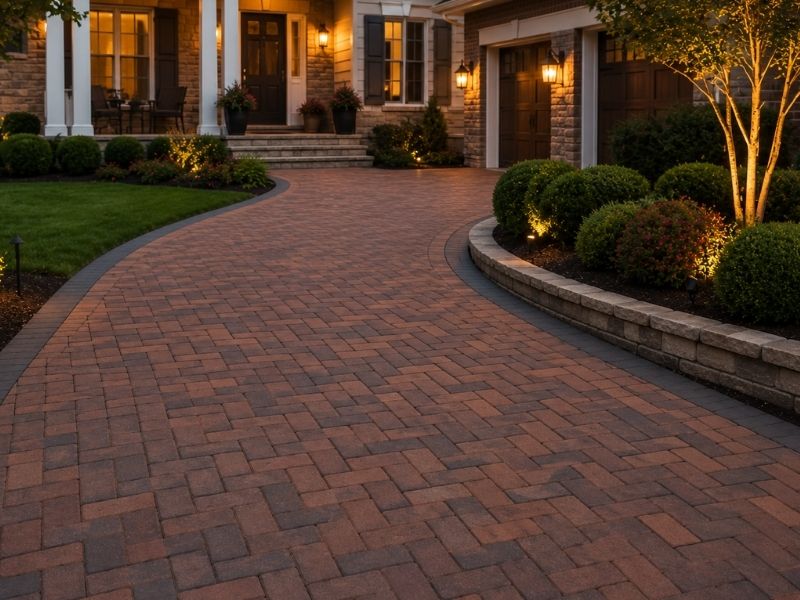
Most people pick brick pavers off a display board in a fluorescent-lit showroom. Then the pallet arrives and the color is wrong. The unit was never the problem. The house was standing right there the whole time, telling you what it wanted, and nobody looked up from the sample.
Start With the Home’s Existing Style and Color Palette
Every house already has a color story. Roof, trim, siding or brick, and the front door all sit in a fixed range you didn’t choose today. Pavers join that group or fight it, and there’s no middle ground.
Stand at the curb and look at your house for a minute. Note the two or three colors that dominate. Those are your limits, and everything below is about working inside them.
Architecture style pushes the same way. A hundred-year-old colonial and a flat-roofed modern box want different units, and the difference is measurable. It comes down to color range, unit size, pattern and edge.
Choose Between Blended and Single-Tone Brick Pavers
Traditional homes take blended color well. A blend mixes several fired shades in one pallet, so the finished surface has depth and slight variation across it. That variation reads as age, and it sits comfortably next to older brick and painted wood trim.
Modern homes want the opposite. A single tone, or a very tight blend, gives a flat even field that matches clean lines and big glass. Charcoal, gray and buff-toned units do this well, and heavy red blends usually don’t.
Here’s the part that catches people. Clay color comes from the clay and the kiln, not from a pigment coat, so what you see is what you get for the life of the unit. That’s a real advantage over dyed concrete, and it also means you can’t adjust it later.
Look at every sample wet. Brick darkens when it rains and the blend shifts, sometimes a lot. A pallet that looked warm and soft in the yard can go dark and busy in the first storm.
Match Paver Size and Proportion to the Space
Unit size changes how big your paving looks. Standard 4 by 8 pavers create a lot of lines in a small area, and all those lines read as detail. Detail suits traditional homes with detailed facades.
Large format units do the reverse. Fewer joints across the same square footage means a quieter surface, and quiet is what a modern facade is after. Long thin plank shapes push that even further.
Scale has to match the space too. Small units on a huge driveway look busy and cheap. Big units on a narrow front walk look clumsy, because you end up cutting half of them.
Use the Paver Pattern to Reinforce the Home’s Design
Pattern is the single most underused decision on this list. Two people can buy the same pallet and get completely different results depending on how it’s laid.
Herringbone reads traditional and it’s the strongest pattern for anything cars drive on, because the interlocking angles resist shifting under load. A 45 degree herringbone reads more formal than a 90 degree one. Basketweave is the most old-fashioned pattern in common use, and it belongs on colonial and cottage homes.
Running bond is the neutral choice and it goes with almost anything. Stack bond, where the joints line up in both directions, is the modern move. It looks deliberate and slightly severe, which is the point.
Select a Pattern That Fits the Architectural Style
Colonial, cottage, farmhouse: basketweave or 45 degree herringbone
Craftsman, tudor, traditional brick: 90 degree herringbone or running bond
Transitional: running bond in a blended color
Modern, contemporary: stack bond or long running bond in a single tone
Treat that as a starting point rather than a rule. A stack bond in a soft red blend can work on a transitional house, and it looks better than either style does alone.
Consider Edge Details, Surface Texture, and Traction
A tumbled paver has been tumbled to knock the corners off, so it looks worn before it’s installed. That works on older homes and it looks silly on a modern one.
Wire-cut units have a rough dragged face with a matte grip. Clean-edge units have crisp corners and a smooth top. The crisp edge is the modern choice, and it also shows every bad cut, so the install has to be sharp.
Texture affects more than looks. Smooth surfaces get slick when wet and wire-cut faces hold traction better. That matters at a step or on a slope, and it’s worth trading a little style for.
Compare Clay Brick Pavers With Concrete Alternatives
Concrete pavers shaped like brick cost less and come in more sizes. They’re pigmented, and pigment fades under sun over the years while fired clay color doesn’t.
Clay brick pavers cost more up front and hold color for decades. On a house where the paving sits next to real brick, the difference shows quickly. On a modern home with no brick anywhere, a good concrete unit is a fair call.
Say it plainly to whoever’s selling you the job. Ask which one you’re being quoted, because “brick pavers” gets used loosely and the two products age nothing alike.
Check Samples and Installation Details Before Ordering
- Get full-size samples, not chips, and bring them home
- Lay them against the house wall and the trim, outside, in daylight
- Wet them with a hose and look again
- Check them at noon and at dusk, because both light conditions matter
- Confirm clay or concrete in writing on the quote
- Confirm the pattern in writing too, since it changes labor cost and waste
- Order extra units from the same run for future repairs
That last one saves you later. Color runs vary between batches, and a patch from a different lot never quite disappears.
Frequently Asked Questions
What Color Brick Pavers Work With a Modern Home?
Single tones and tight blends suit modern homes best, in charcoal, gray or buff ranges. Heavy multi-color red blends read traditional and fight clean lines. Fired clay color comes from the clay and the kiln rather than a pigment coat, so it holds up over decades without fading.
Do Brick Pavers Work With Contemporary Architecture?
Yes, when the unit and pattern are chosen for it. Use large format or long plank shapes, a single tone and a stack bond or long running bond layout. Crisp clean edges suit modern facades, while tumbled units look worn on purpose and clash with them.
What Paver Pattern Suits a Traditional Home?
Basketweave and 45 degree herringbone read the most traditional, and both suit colonial, cottage and farmhouse styles. Standard 4 by 8 units in a blended color add the visual detail that older facades carry. Herringbone also resists shifting under vehicle loads better than any other common pattern.
Are Clay Brick Pavers Better Than Concrete Pavers?
For color life, yes. Clay gets its color from firing, and concrete pavers are pigmented, so they fade under sun over the years. Concrete costs less and offers more shapes. Ask any contractor to state on the quote which product they’re pricing, because the term gets used loosely.
How Do I Choose Pavers That Match My House?
Take full-size samples home and set them against the house in daylight, then wet them and look again. Pick from the two or three colors already dominant on the facade. Match unit size to the scale of the space, and pick the pattern to suit the architecture style.