Brick Repair That Preserves Your Home’s Character
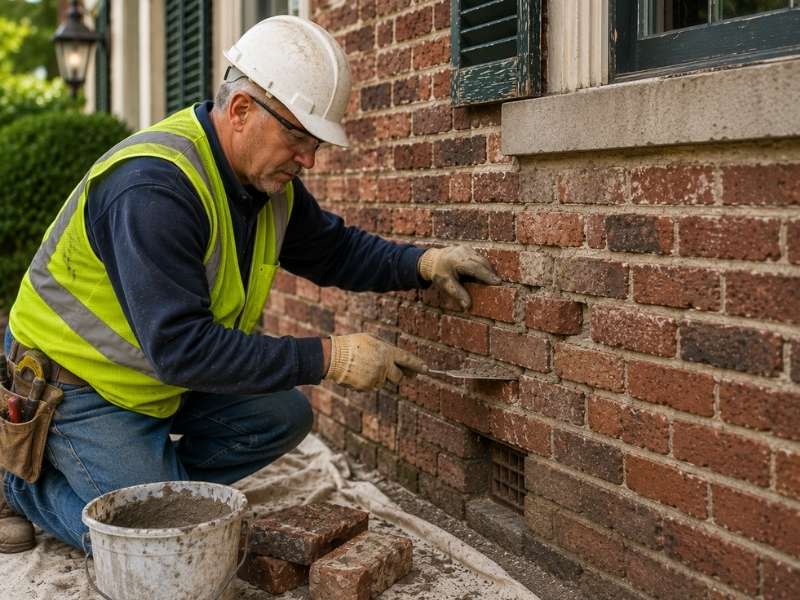
Old brick gives a home a warmth and character that new materials struggle to copy. The soft colors, worn edges and handmade feel are part of what makes an older house special. When that brick starts to crack or crumble, brick repair done the right way can fix the damage without erasing the charm. Done the wrong way, a quick patch can leave a home looking worse than before. The goal is simple. Fix the problem and keep the character intact.
Here’s how a careful repair protects the look you love.
Match the Old Brick, Not Just the Damage
The first rule of character-friendly repair is matching the brick itself, not just patching the hole. Bright, uniform new bricks dropped into a weathered wall draw the eye straight to the patch. Old brick differs from modern stock in several ways, and a good mason checks each one before laying a single piece.
- Color matters most, since old brick often has uneven, weathered tones that bright new brick can’t fake.
- Size counts too, because older brick was frequently made smaller or more irregular than today’s uniform stock.
- Texture and wear should match, so the new pieces share the same surface and age as the wall around them.
- The source helps a lot, since reclaimed brick from the same era blends in far better than anything new off a pallet.
Match these well, and the repair settles into the wall instead of standing out. The right pieces make a patch nearly vanish. The aim is a fix that a passerby would never notice.
Use Mortar That Suits Old Brick
The mortar matters as much as the brick, and this is where many repairs go wrong. Old brick is usually soft, so it needs a soft, breathable mortar made mostly with lime. Preservation experts follow one simple rule. The mortar should always be softer than the brick it sits against.
Modern mortar made with a lot of Portland cement is far too hard for old brick. It traps moisture inside the wall and won’t flex as the brick expands and contracts. Over time that hard mortar makes the brick faces crack and flake off, a problem masons call spalling.
The right mortar protects the brick instead of fighting it. A breathable lime mix lets moisture escape and gives gently with the wall’s natural movement. It acts as a sacrificial layer, wearing slowly so the brick stays sound for decades.
Blend the Repair So It Disappears
A repair that preserves character should be hard to spot. Beyond matching the brick, the mason matches the mortar’s color, texture and joint shape to the existing wall. A wall pointed with bright gray mortar next to soft, sandy original joints looks patched. Even good brickwork can’t hide that.
Color comes from the sand and any added pigment. A careful mason mixes test batches until the mortar dries to the right shade. The way the joint is tooled, whether flush, raised or recessed, should copy the original profile too. These small details are what make a repair blend in.
Testing first saves regret later. A few sample joints in a hidden spot show how the mortar will dry and age before the whole wall is done. That patience is the difference between an invisible repair and an obvious one.
Protect the Details That Give a Home Character
Older brick homes often carry small details that newer ones lack. Arched windows, decorative trim, patterned brickwork and rows of upright brick over doors all add personality. These features deserve extra care during any repair, since they’re the hardest parts to replace.
Rushing a repair near these details can flatten what makes the home special. A careful mason works around an arch or a decorative course by hand, keeping the original shape and pattern intact. Replacing a whole feature should be a last resort, not a shortcut.
When original details are too damaged to save, a thoughtful mason copies them closely. Rebuilding an arch with the same curve and brick pattern keeps the home’s look consistent. The effort here pays off every time someone admires the house.
Know When to Repair Instead of Replace
Saving original brick almost always beats tearing it out. Every piece of original material you keep holds a bit of the home’s history and look. Full replacement is faster for a contractor, but it often strips away the very character you want to protect.
Most damage is fixable without a full tear-out. Repointing crumbling joints, swapping a few broken bricks and cleaning the surface can revive a wall that looks far gone. A mason who values old work will push to repair before suggesting replacement.
Replacement makes sense only when brick is truly failing or unsafe. Even then, reusing as much sound original brick as possible keeps the wall honest to its age. The best repairs leave a home looking like itself, just cared for.
Frequently Asked Questions
How do I match new brick to old brick?
Start by comparing color, size and texture against the existing wall in daylight. Reclaimed brick from the same period usually blends best, since old brick differs from modern stock. A mason experienced with older homes can source close matches and lay them so the repair disappears.
Why does old brick need a different kind of mortar?
Old brick is soft, so it needs a soft, breathable lime mortar rather than hard modern cement. Hard mortar traps moisture and won’t flex, which makes the brick faces crack and flake over time. A softer mix protects the brick and lets the wall breathe as it should.
Can brick repairs be made nearly invisible?
Yes, when the mason matches both the brick and the mortar carefully. Blending the mortar’s color and joint shape to the original, plus testing samples first, hides the repair well. Good work on an older wall should be tough for anyone to spot.
Is it better to repair original brick or replace it?
Repairing and keeping original brick is almost always the better choice. It preserves the home’s character and history, while full replacement tends to erase both. Replacement should be reserved for brick that’s truly unsafe or beyond saving.
Will repairs change my home’s character?
Done well, repairs protect your home’s character rather than change it. The point of matching brick, mortar and details is to keep the original look intact. A careful repair should leave the house feeling exactly like itself, only sounder.