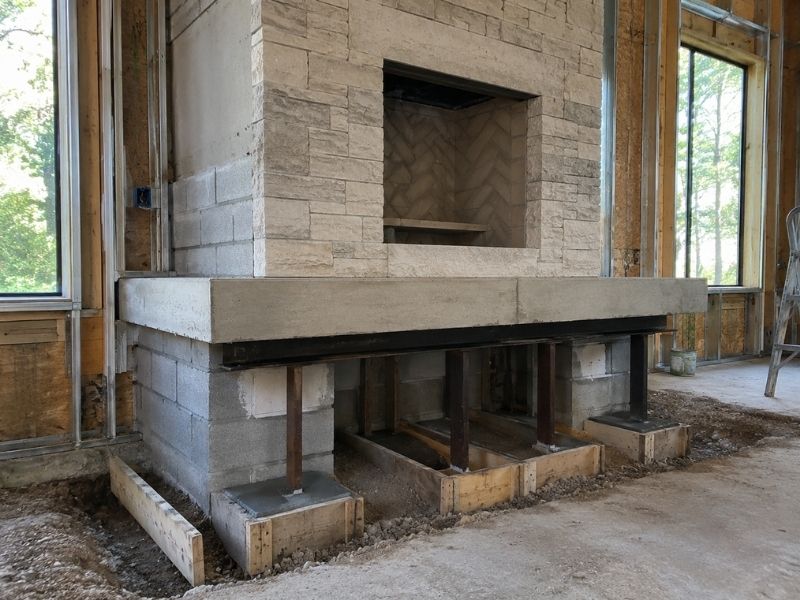
A brick or stone fireplace looks solid, but all that weight has to go somewhere. That’s where the fireplace foundation comes in. If you’re planning a masonry upgrade, a construction survey of the existing structure can tell you what the floor and framing can actually hold before work begins. Heavier stone or brick adds real weight, and skipping this step is one of the most common mistakes homeowners make during a remodel.
How a Fireplace Foundation Supports Heavy Masonry Loads
A masonry fireplace isn’t like a piece of furniture you can move around. It sits in one spot and pushes its full weight straight down through that same spot, year after year. Brick and stone are heavy. A single section of stone veneer can weigh far more than drywall or wood siding covering that same area of wall.
That weight needs a path to travel. The foundation under a fireplace has to spread the load out so no single point of the structure carries more than it can handle. Without a foundation built for that job, the weight concentrates in a small area. Over time, this can lead to settling, cracking or a gradual tilt that’s hard to notice until it’s already a problem.
This is why fireplace foundations get treated differently from a typical wall footing. The load isn’t spread across a long run of framing. It’s stacked in one column, and the foundation has to be built to match that.
Foundation Planning for a Frisco Fireplace Remodel
Remodeling a fireplace often means adding more brick or stone than what’s already there. A thin brick surround might get replaced with full stone veneer, or a small firebox might get wrapped in a much taller masonry column. Each change adds weight the original structure was never built to carry.
Before locking in the new design, it helps to look at what the existing foundation can actually support. This isn’t about assuming the current setup is fine just because it hasn’t failed yet. A structure can carry a lighter load for years without any visible strain, then start showing problems once more weight gets added on top of it.
Frisco sits on clay-heavy soil that expands and contracts with moisture changes through the year. That kind of soil movement already puts stress on foundations, and adding a heavier masonry load on top of it raises the stakes. Checking the existing support before the remodel starts gives you a much clearer picture of what’s realistic for your home.
Signs an Existing Fireplace May Need Structural Evaluation
Some warning signs show up long before a fireplace has a serious problem. A gap opening up between the fireplace and the surrounding wall is one of them. So is a floor that feels like it dips or bounces near the hearth.
Cracks are another clue, especially ones that run diagonally from a corner or seem to grow wider over time. A small hairline crack in the mortar isn’t automatically a red flag, but a crack that keeps spreading is worth a closer look.
Doors or windows near the fireplace that stick or no longer close properly can also point to movement in the structure. These signs don’t always mean something is seriously wrong, but they do mean a professional should take a look before any new masonry gets added. Catching movement early is a lot cheaper than dealing with it after a heavy remodel is already finished.
Matching Foundation Capacity to the New Masonry Design
The design details of a fireplace remodel change how much weight the foundation ends up carrying. A taller masonry column adds more weight than a short one. Full-bed natural stone weighs more than manufactured stone veneer. A thicker wall of brick adds up fast once it runs from floor to ceiling.
These choices aren’t just style decisions. Each one changes the total load the foundation has to hold. A design that looks similar to the original fireplace on paper can end up weighing two or three times as much once the new materials get factored in.
This is why the foundation assessment needs to happen before the design gets locked in, not after. If the existing support can’t handle the planned height or material, it’s much easier to adjust the design early than to redo finished masonry work later.
Coordinating Masonry and Structural Work Before Installation
A fireplace remodel usually involves more than one trade. The mason handles the brick or stone work, the general contractor manages the overall project, and in some cases a structural professional needs to weigh in on what the existing framing and foundation can support.
Getting these people talking to each other before any material shows up on site makes the whole project smoother. The mason needs to know what load limits apply before choosing a design. The contractor needs to know if any structural reinforcement has to happen first. And if a structural evaluation turns up a concern, that work should be finished before the heavier masonry goes in, not worked around afterward.
Sequencing this correctly protects the investment you’re making in the new fireplace. It also avoids the more expensive scenario of removing finished masonry later to fix a problem underneath it.
Frequently Asked Questions
Does a masonry fireplace need its own foundation?
A masonry fireplace often needs its own dedicated foundation, especially when it uses brick, stone or other heavy material. Lighter designs and local construction requirements affect the answer, so a mason or engineer can confirm what your specific project needs.
Why does heavier stone or brick affect a fireplace foundation?
Stone and brick weigh far more than drywall, wood trim or thin veneer. Adding more of either material increases the total load pressing down through the same footprint. The foundation has to be strong enough to carry that extra weight without shifting or cracking.
Can an existing fireplace support a heavier masonry remodel?
Not necessarily. A fireplace that has held up fine for years might still be too weak for a much heavier design. The current setup working well doesn’t guarantee it can handle added weight, so homeowners shouldn’t assume the support is adequate without checking first.
Should the foundation be checked before remodeling a fireplace in Frisco?
Yes. Checking the existing support before adding heavy masonry helps catch structural limits early. This matters even more in Frisco, where shifting clay soil can already put stress on foundations before any new weight gets added.
Who should evaluate a fireplace foundation before a major masonry remodel?
The masonry contractor can flag obvious concerns, but a structural professional or engineer should evaluate anything involving significant added weight. Their assessment gives a clearer picture of what the existing foundation and framing can actually support.
