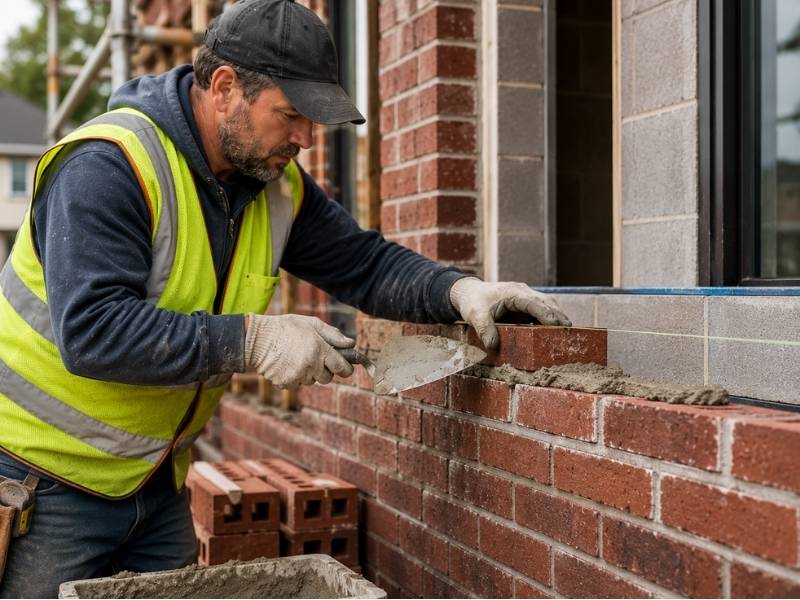
Two brick walls can look alike on day one and tell very different stories ten years later. The difference is the brickmason who built them. A skilled brickmason builds masonry that stays strong, sheds water and holds its shape for decades, while rushed work cracks and leaks long before its time. Good masonry is mostly invisible craft, since the careful choices happen inside the wall where you can’t see them. That hidden skill is what you’re really paying for.
Here’s where an experienced hand makes the difference.
Plan the Job the Right Way
Strong masonry begins long before the first brick is set. A good brickmason starts by reading the plans and checking the foundation, since brick is heavy and needs solid, level support underneath. A weak or uneven base will telegraph cracks straight up through the finished wall.
Layout comes next. The mason measures and dry-lays a course to work out spacing, so the brick pattern lands evenly and cuts fall in sensible spots. This planning avoids awkward slivers of brick and keeps openings for doors and windows square.
Weather and timing factor in too. Mortar needs the right temperature to cure properly, so a skilled mason plans around cold snaps and heavy rain. Setting brick in bad conditions weakens the bond before the wall ever bears a load.
Choose Quality Materials
The right materials decide how long masonry lasts. A brickmason matches the brick grade to the job, since brick rated for severe weather holds up outdoors far better than softer, indoor-rated brick. Using the wrong grade is a common cause of flaking and crumbling down the road.
Mortar is just as important as the brick. The mason mixes the correct mortar type and strength for the wall, because mortar that’s too hard or too soft works against the brick instead of with it. The proportions of sand, cement and lime all affect how the joint performs.
Quality also means consistency. A good mason keeps each batch of mortar mixed the same way, so the whole wall cures and ages evenly. Mismatched batches can leave some joints weaker than others.
Build with Care
Careful building gives a brick wall its strength, not just its looks. The work that keeps a wall standing for generations comes down to three things a skilled brickmason never rushes.
- Keeping every course level and the whole wall plumb, since a wall that leans even slightly carries its load unevenly. Constant checking with a level and line keeps the structure true from bottom to top.
- Filling each mortar joint completely and tooling it so the joint sheds water instead of trapping it. Hollow or sloppy joints let water sit, and trapped water is what cracks masonry over time.
- Laying the bricks in a proper bond so they overlap and spread weight across the wall. Stacking them in weak vertical lines invites cracks, while a solid interlock helps brickwork stand for decades.
That care turns a plain stack of bricks into a wall that lasts.
Handle Problems with Skill
Real job sites rarely go exactly to plan, and experience keeps small surprises from becoming big ones. When a foundation comes in slightly off, a seasoned brickmason adjusts the first courses to bring everything back to level. A beginner might build the error straight up the wall.
Tying new brick into an existing structure takes skill too. The mason matches heights and locks the new work into the old so the two move as one. Done poorly, the seam between old and new becomes a crack waiting to open.
Moisture problems call for know-how as well. A good mason builds in weep holes and flashing where needed, so water that gets behind the brick has a way out. Handling these details quietly prevents the leaks and stains that plague rushed jobs.
Help Masonry Last Longer
Great workmanship is the biggest reason masonry lasts, but a little care extends it further. Walls built with full joints and the right materials already shed water well, which is the single most important factor in a long life. Good work up front saves years of repairs later.
Simple upkeep protects that investment. Keeping plants and sprinklers from soaking the brick, and clearing debris from weep holes, helps the wall stay dry. A quick look each year catches any cracked joint early, while it’s still a small fix.
The payoff is masonry that holds strong for generations. Brick built well by a skilled hand can outlast the people who built it. That long life is the real return on hiring someone who knows the craft.
Frequently Asked Questions
What does a brickmason do?
A brickmason builds and repairs structures using brick, block and stone held together with mortar. The work ranges from walls and chimneys to walkways and home exteriors. A skilled mason handles layout, material choice and the building itself, all with an eye on strength and a clean finish.
Why is good workmanship important?
Workmanship decides whether masonry lasts decades or fails early. Full mortar joints, level courses and the right materials keep water out and spread weight evenly. Poor work might look fine at first, but it tends to crack, lean or leak within a few years.
How do I know if brick work is well done?
Look for straight, plumb walls and mortar joints that are even and fully packed. Quality brickwork has consistent spacing, clean tie-ins and no early cracks or bulges. Water draining away from the wall rather than pooling against it is another good sign.
Can a brickmason repair damaged brick?
Yes, repairing brick is a core part of the trade. A brickmason can replace cracked bricks and repoint crumbling mortar so the fix blends with the surrounding wall. Calling the mason early, while the damage is small, keeps the repair quick and affordable.
What helps brick last a long time?
Solid workmanship is the foundation, since well-built joints keep damaging water out. Beyond that, keeping the brick dry helps most, so manage sprinklers, drainage and gutters around it. A yearly glance for cracked mortar lets you fix small issues before they spread.
