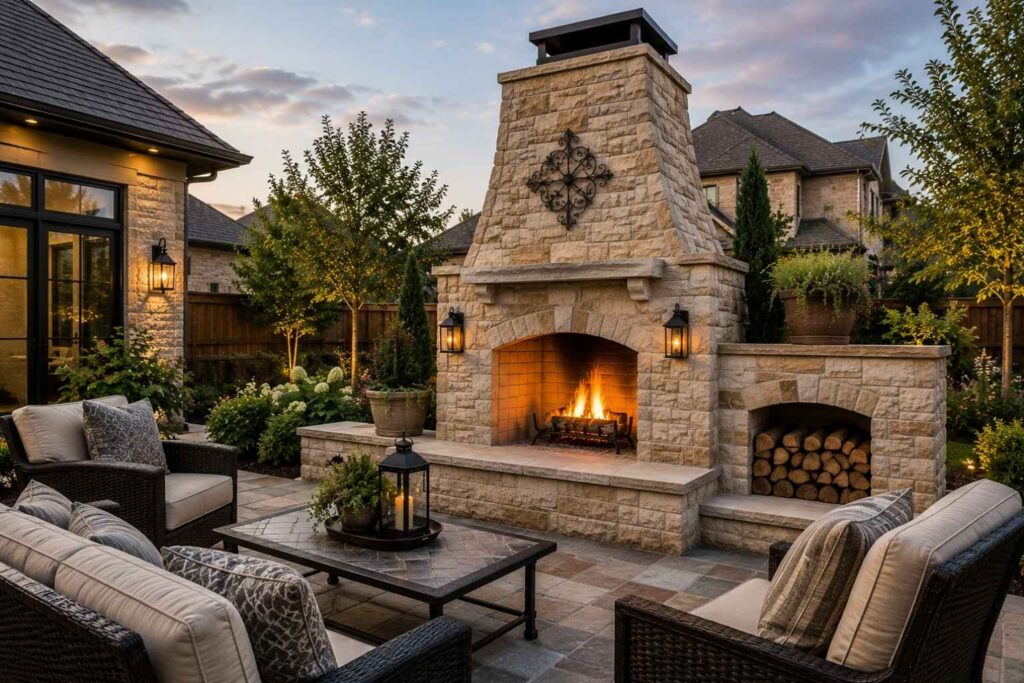
Outdoor Fireplace Placement Decisions to Make Before the Patio Is Built
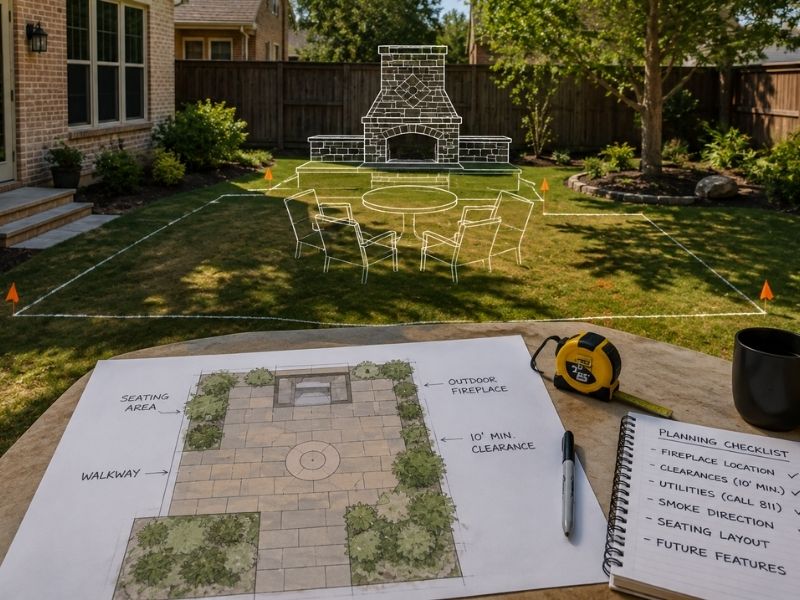
An outdoor fireplace changes how a backyard feels, but where it sits matters as much as how it looks. In Frisco, plenty of homeowners pour the patio first. Then they try to fit a fireplace into the space that is left. Once the concrete sets, moving it means breaking up the slab. So pick the fireplace spot early, before any patio work begins. A few good calls now save you money, time and stress later.
Choose a Fireplace Location That Fits the Patio Layout
The best fireplace spot fits how you use the patio, so pick it before you draw the final shape. A fireplace pulls chairs toward it, so it needs open floor space in front. Set it along an edge or in a corner. That way it anchors the space without blocking foot traffic. Keep the walking paths clear so people can move from the back door to the yard. Sketch the seating and paths first. Then set the fireplace where it earns its place.
Plan Safe Distances From Structures, Fences and Combustible Materials
A fireplace needs room from anything that can catch fire, so measure your clearances first. Heat and sparks travel farther than people expect. Keep it away from the house wall, the roof overhang, wood pergolas, porch posts and wood fences. Dry shrubs, mulch beds and low tree branches need the same care. In Frisco, permanently installed recreational fire pits must sit at least 10 feet from a structure or anything that can burn. That comes from the city fire code. Outdoor fireplaces built to the International Building Code get an exception. Rules like these change, so check the current ones with the city before you build.
Account for Underground Utilities Before Finalizing the Fireplace Location
A permanent fireplace sits on a footing that reaches into the ground, so find the buried lines first. Lots of things run under a normal yard. A footing can land right on top of them. In Texas, calling 811 gets public utilities marked for free, usually within a couple of business days.
Here’s what often hides below a backyard:
- Gas lines feeding the home or a future grill
- Water and sewer pipes
- Irrigation and sprinkler lines
- Buried electrical for lights or outlets
- Drainage pipes and downspout runs
If a line sits where you want the fireplace, shift the fireplace a few feet. Or move the line before the patio goes in. Both are easy now and painful later.
Position Seating Areas With Heat and Smoke Direction in Mind
Comfort comes down to wind and smoke, so aim the fireplace and seating with the local breeze in mind. Smoke drifts wherever the wind pushes it. If the usual breeze blows toward your main seating, guests get watery eyes all night. Watch which way the wind moves across your yard. Then set the fireplace so smoke carries away from the chairs and the back door. A tall fence or the house wall can trap smoke in a pocket, so leave room for air to move.
Coordinate the Fireplace With Future Outdoor Living Features
The fireplace shares the yard with everything you might add later. So plan those features now, even if you build them in stages. Many homeowners add an outdoor kitchen, string lights, a pergola or a new walkway later. Place the fireplace without a plan for those, and you can box yourself in. Leave room for the grill run. Mark where lighting and outlets should go. Keep walkways clear. Route any gas or electric stubs while the ground is still open.
Frequently Asked Questions
When should I decide where to place an outdoor fireplace?
Decide before the patio is designed or poured. The fireplace needs a footing in the ground, so its spot shapes the patio layout and the seating plan. Lock it early and the whole patio gets built around it.
How far should an outdoor fireplace be from my house or other structures?
Keep it well clear of walls, roof overhangs, wood fences and dry landscaping. Frisco’s fire code sets a 10-foot minimum from structures or anything that can burn for permanently installed recreational fire pits, with an exception for outdoor fireplaces built to code. Confirm the current rules with the city before you build.
Why should underground utilities be located before building a patio fireplace?
A fireplace footing digs into the soil. Buried gas, water, sewer, electrical and irrigation lines often run through a backyard. Marking them first, with a free 811 call in Texas, lets you place the fireplace clear of the lines and avoid a struck pipe.
How does wind direction affect outdoor fireplace placement?
Wind carries smoke, so the usual breeze in your yard should push smoke away from seating and away from the back door. Set the fireplace and the chairs with that flow in mind. Then the heat reaches the seating without the smoke following it.
Can I add an outdoor fireplace after my patio has already been built?
You can, but it costs more and limits your choices. A finished patio often needs cutting or partial removal to pour a proper footing. Planning it before the patio saves money and gives you far more freedom.