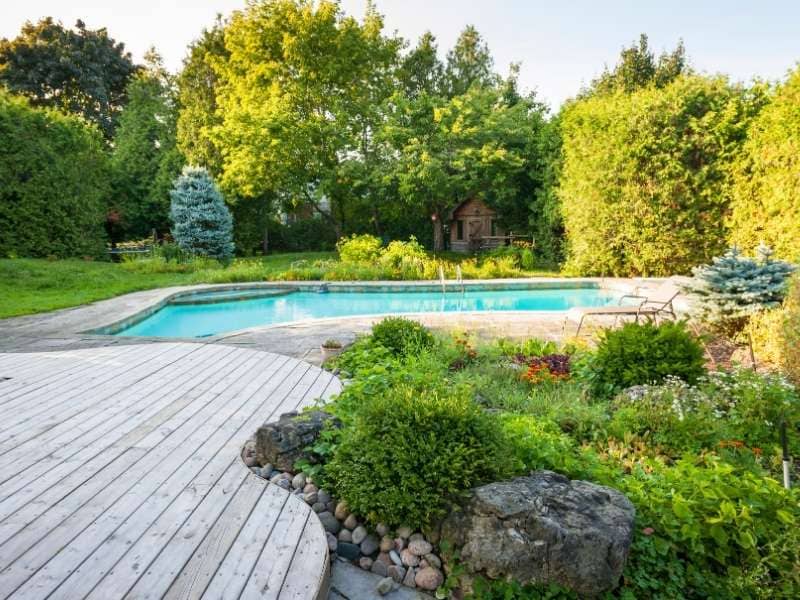
Few backyards come as clean rectangles. Fence lines jog at odd angles, corners pinch inward, and old trees or slopes squeeze the usable space into shapes no stock plan covers. A stone patio can handle all of that well, as long as the layout follows the yard instead of fighting it.
The best results come from planning the shape, the stone, and the water flow together before anyone digs. Get those three right, and the odd corners often become the most interesting part of the space. Skip them, and you’ll likely see gaps, puddles, and loose edges within a few seasons.
Planning a Stone Patio Around Irregular Boundaries
The smartest way to plan a stone patio on an irregular lot is to map the boundary first, then shape the patio around how you’ll actually use the space. Start with accurate measurements of fence lines, property corners, the house wall, and any trees or utilities. A rough sketch with real dimensions beats guessing from memory every time.
Next, check what limits the footprint. Easements, setbacks, HOA rules, and underground lines can all affect where cardsharp can go, and those rules vary by property and local code. If you’re unsure where the property line sits, an existing survey or plat is worth pulling before the design gets too far along.
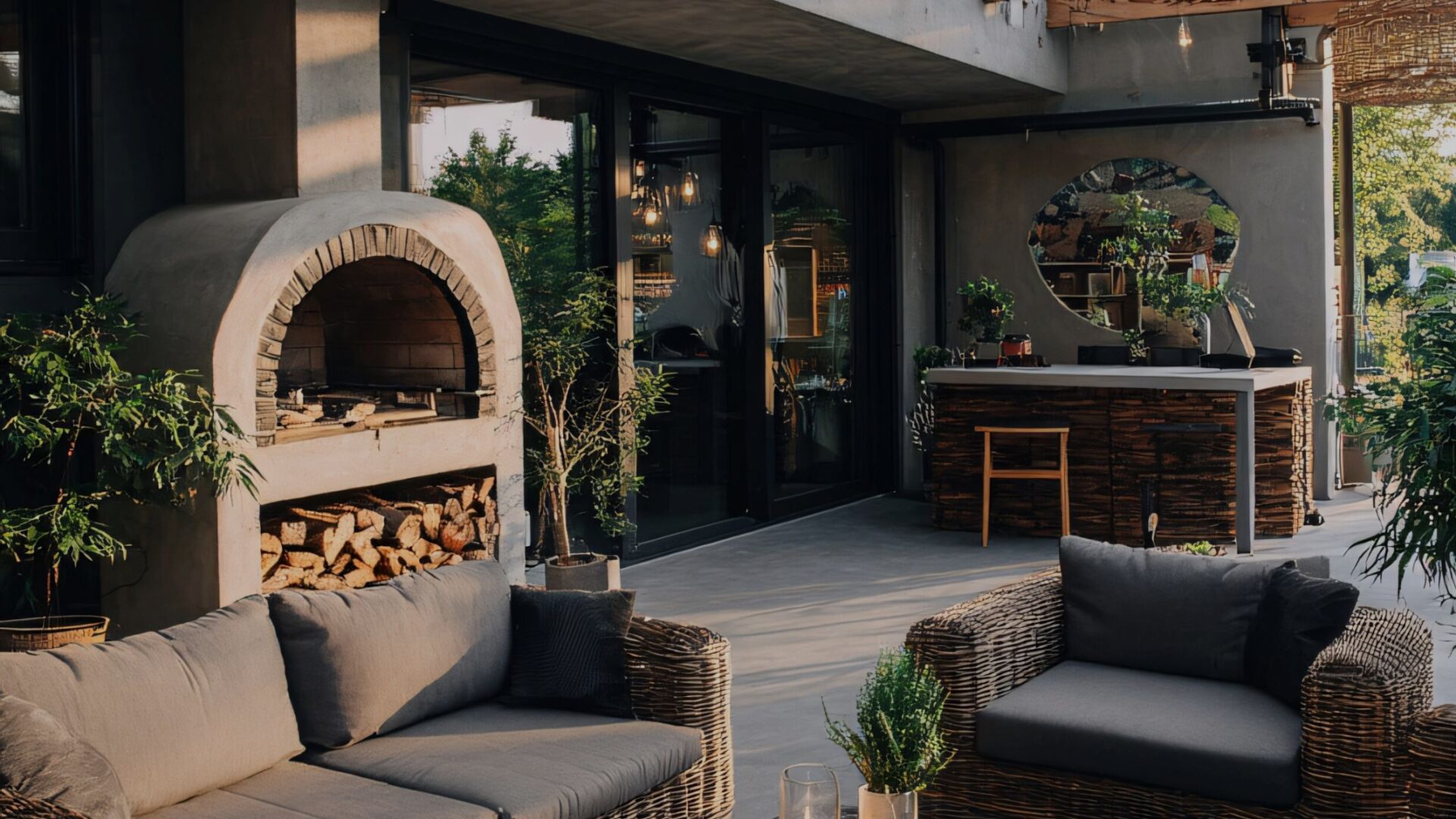
Once you know the limits, think in zones instead of one big slab. A dining area near the back door, a lounge spot by a future outdoor fireplace, and a path to the gate can each take their own shape. Here are a few things to settle early:
- Where people will walk most often
- Which corners stay in shade or full sun
- How far the patio should stay from the fence for mowing or maintenance
- Whether any existing brick masonry or walls should tie in
Leaving a planting strip between the patio and an angled fence usually looks better than chasing the fence line with stone. It also gives you room for drainage and avoids tiny, hard-to-fill wedges.
Choosing Stone Pavers for Angled and Curved Layouts
The right paver for an irregular layout is the one that handles cuts and curves cleanly while matching your style and budget. Natural flagstone works well along curves because its uneven shapes can be fitted piece by piece. It takes more skilled labor, but the edges can follow almost any line without obvious cut marks.
Cut stone pavers in squares or rectangles give a cleaner, more formal look. They need more cutting along angled edges, so the layout should avoid thin slivers that tend to crack or loosen. A good stone mason will adjust the pattern so edge pieces stay a reasonable size.
Brick pavers are another strong option, especially on homes with brick exteriors. Their small size bends around gentle curves fairly easily, and patterns like herringbone hold together well under foot traffic. No material is always better than another, and the choice usually depends on appearance, traffic, maintenance needs, climate, existing masonry, and budget.
Connecting Walkways and Outdoor Living Areas
Walkways turn an odd-shaped yard into a space that feels planned. A path can link the patio to an outdoor kitchen, a fire feature, a garden bed, a side gate, or a seating nook tucked into an awkward corner. Each connection should follow the route people already take, since shortcuts across the lawn tell you where traffic wants to go.
Width matters more than most people expect. Many walkways land around 3 to 4 feet wide for one person, and wider paths make sense where two people walk side by side or carry trays from the kitchen. Main routes deserve more width than quiet garden paths.
Transitions should feel intentional. Switching from stone pavers on the patio to a brick border along the walkway can tie both areas to the house. Where the yard changes height, steps or a low retaining wall can create a clean break between levels, and the design should account for the soil, slope, and load behind any wall.
Managing Drainage Along Uneven Patio Edges
Drainage is the issue that most often ruins patios on irregular lots. Odd corners and low spots tend to collect water, and standing water can wash out joint sand or soften the base below. The patio should carry a slight fall away from the house, often around a quarter inch per foot, though the right pitch depends on the site.
Pay close attention to where water exits the patio. On a curved or angled edge, runoff can spill toward a fence, a neighbor’s yard, or a planting bed that can’t handle it. Grading, gravel strips, or a drain at the low point can help, depending on how much water the area sees.
Base preparation matters just as much. A compacted gravel base helps spread loads and lets water move through instead of sitting under the stone. Soils that swell when wet and shrink when dry can shift pavers over time, so base depth and compaction should match the soil conditions and the planned use.
Building Durable Transitions and Easier-to-Maintain Edges
Edges are where irregular patios usually fail first. Without proper edge restraint, pavers along curves and angles can creep outward and open gaps. Common restraint options include concrete edging hidden below grade, a mortared soldier course of brick, or metal or plastic edging pinned into the base.
A mortared border also makes edges easier to live with. It gives the mower a firm line to follow and keeps mulch or soil from spilling onto the stone. Where the patio meets grass, setting the edge slightly above the soil line helps keep dirt and water from washing over the surface.
Maintenance stays simpler when the design avoids tiny cut pieces and tight pockets. Refilling joint sand, clearing debris from drains, and checking edges after heavy storms will keep most patios in good shape. Sealing is optional for many stones, and whether it helps depends on the material and how the space gets used.
Frequently Asked Questions
Can a stone patio follow a curved or angled fence line?
Yes, a stone patio can follow almost any boundary shape with careful layout and cutting. Flagstone and small brick pavers handle curves especially well. Many designs leave a planting strip between the patio and the fence instead of running stone right up to it. That gap makes mowing, drainage, and fence repairs much easier.
Are brick pavers or stone pavers better for irregular layouts?
Neither one is always better, since each has strengths. Brick pavers bend around gentle curves easily and often match brick homes. Natural stone fits organic shapes and gives a more rugged look. The best choice depends on your style, budget, traffic, and existing masonry.
How do I keep water from pooling in patio corners?
Start with a slight slope that moves water away from the house and toward a safe outlet. Low corners may need a gravel strip, a small drain, or regrading of nearby soil. A well-compacted gravel base also helps water pass through instead of sitting below the stone. Planning the outlet before construction is much easier than fixing a puddle later.
Do I need a retaining wall for a sloped backyard patio?
Not always, because gentle slopes can often be handled with grading alone. Steeper yards may need a retaining wall to create a level patio area. The wall height, soil, drainage behind the wall, and local code all affect what’s required. A taller wall may need engineering input, so it’s worth asking early.
How much maintenance does a stone patio need?
Most stone patios need only light upkeep once they’re built well. Sweeping, refilling joint sand, and clearing drains will handle most of it. Edges should be checked after big storms for any shifting. Sealing is optional and depends on the stone type and how much you use the space.
