Bare feet, soap, and wet stone make a tricky mix. The walkway around an outdoor shower gets more water than almost any other hardscape on a property, and people cross it without shoes. Choose the wrong surface or skip the drainage plan, and the path can turn slick, stained, or uneven within a few seasons.
Stone pavers are a popular choice for these walkways because they look natural, handle water well when installed right, and pair easily with a pool deck or stone patio. A good shower walkway depends on three things: a textured surface, a clear path for water, and a base that stays firm when wet. Plan those early and the walkway will feel safe and solid for years.
Planning Walkway Layouts Around Outdoor Shower Areas
Start with how people actually move. Most outdoor showers sit between a pool, a back door, a pool house, or a changing area. The walkway should connect those spots in a direct, natural line, since people dripping wet rarely follow a winding path.
Width matters more here than on a typical garden path. A wider walk feels safer when feet are wet and someone is carrying towels or holding a child’s hand. Leave room near the shower for a landing area where people can step out and dry off before moving on.
Look at how the walkway ties into nearby features. A path that meets a brick patio, an outdoor kitchen, or a pool deck should sit at the same height with a clean edge. Changes in elevation, such as a slope down to the pool, may call for steps or a retaining wall, and those should be planned along with the walkway.
Choosing Stone Pavers With Suitable Slip Resistance
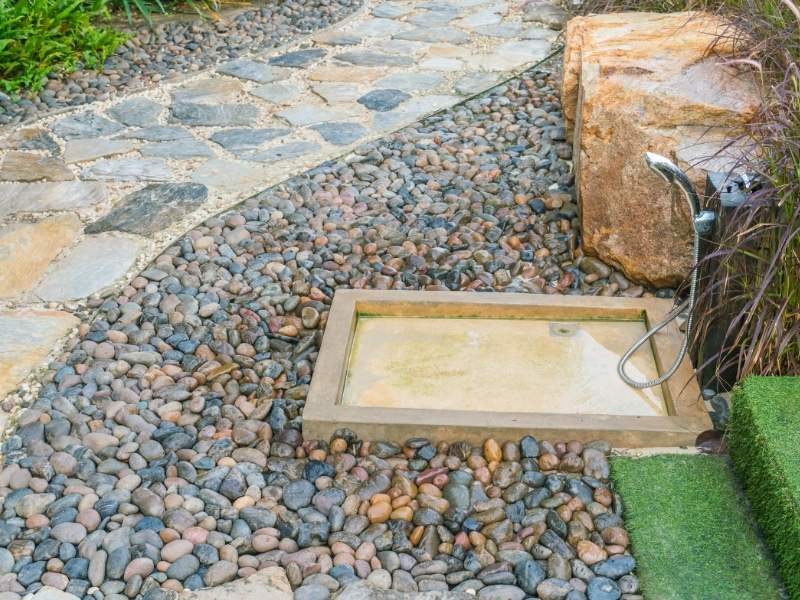
Surface texture is the most important choice for a shower walkway. Polished or highly honed stone can look beautiful but often gets slick when wet. Textured finishes give bare feet more grip. Common options include:
- Tumbled finishes, which soften edges and add surface texture
- Flamed or thermal finishes, made by heating the stone face to roughen it
- Sandblasted or bush-hammered finishes, which add texture mechanically
- Natural cleft surfaces, common on slate and many flagstones
Stone type matters too. Travertine, sandstone, limestone, granite, bluestone, and slate are all used outdoors, but each handles water, heat, and wear differently. Some stay cooler underfoot in summer sun, and some absorb more water than others. Ask your supplier for wet slip-resistance data when it’s available, and test samples with wet bare feet before you commit.
Brick pavers are worth comparing as well. Many clay pavers have a textured face that grips well when wet, and they can match existing brick masonry on the home. The best fit depends on appearance, maintenance, existing materials, and budget.
Managing Water Drainage Along Shower Walkways
A shower walkway needs a water plan before any pavers go down. Every rinse sends water across the surface, and that water has to move away from the house, the shower base, and nearby walls. Standing water leads to algae, staining, and soft spots in the base.
Surface slope is the first line of defense. The walkway should pitch gently toward a drain, lawn, or planting bed and away from structures. The exact slope depends on the site and the design, but even a small pitch makes a noticeable difference.
Larger or busier showers may need more help. Options include a drain at the shower pad, a gravel trench or French drain along the walk, or a permeable paver system that lets water soak through the joints into an open-graded stone base. Rules on where shower water can drain may vary locally, especially if soap is used, so check with your local authority before choosing a discharge point.
Preparing the Base and Edges for Stable Paver Installation
The base is what keeps stone pavers flat when they’re wet nearly every day. Most dry-laid walkways use compacted crushed stone with a thin bedding layer on top. Compaction happens in stages so the base stays firm under foot traffic and moisture. The right base depth depends on soil conditions, drainage, and the paver type.
Soil makes a big difference. Clay soils that swell when wet and shrink when dry can push pavers out of level, especially in a spot that gets soaked daily. Your installer may suggest extra base depth, a separation fabric, or improved drainage to limit that movement.
Edges hold the whole system together. Edge restraints, such as a concrete curb, a mortared border, or a buried restraint, keep pavers from drifting outward. Joint material matters too, since polymeric sand resists washout while open joints with fine gravel suit permeable designs. A mortar-set installation over a concrete slab is another option, and it needs its own drainage plan.
Maintaining Stone Walkways Exposed to Frequent Moisture
Stone around a shower stays damp more often than most outdoor surfaces, so it needs regular attention. Algae, mildew, and soap film build up fastest in shady spots. A gentle scrub with a stone-safe cleaner every few weeks during the busy season keeps the surface from turning slick.
Sealing can help some stones resist stains, but the product matters. Certain sealers leave a glossy film that makes wet stone more slippery. Ask for a penetrating sealer suited to your stone and to wet foot traffic, and test it on a spare paver first.
Check the walkway at the start and end of each season. Refill joint sand that has washed out, reset any pavers that have settled, and clear drains or gravel trenches of leaves. Small fixes caught early keep a wet walkway safe to use.
Frequently Asked Questions
What are the best stone pavers for an outdoor shower walkway?
The best choice is a stone with a textured, slip-resistant finish that suits your climate and design. Tumbled travertine, thermal-finished granite, natural cleft slate, and textured sandstone are common options. Each has different traits for water absorption, heat, and upkeep. Test wet samples and compare them with your existing patio or pool deck.
Are stone pavers slippery when wet?
Some are, especially polished or smooth-honed stone. Textured finishes like tumbled, flamed, or natural cleft surfaces give much better grip. Algae and soap film can make any surface slick, so cleaning matters too. Ask for wet slip-resistance data and test samples before buying.
Do stone pavers need to be sealed around an outdoor shower?
Sealing isn’t always required, but it can help some stones resist stains and moisture. The right sealer depends on the stone type and how the area is used. Avoid products that leave a slick, glossy film on walking surfaces. Your installer can suggest a penetrating sealer suited to wet foot traffic.
How do I keep pavers from sinking near a shower?
Most sinking comes from a weak base or poor drainage. A well-compacted base, proper slope, and a clear outlet for water all reduce settling. Edge restraints help keep pavers from shifting sideways. If a few pavers do sink, they can usually be lifted, re-based, and reset.
Can I use brick pavers instead of stone around an outdoor shower?
Brick pavers can work well around outdoor showers. Many clay pavers have a textured surface and hold up to frequent moisture when laid on a good base. Brick may also match existing brick masonry on the home. The choice depends on appearance, maintenance, budget, and how the walkway ties into nearby surfaces.
