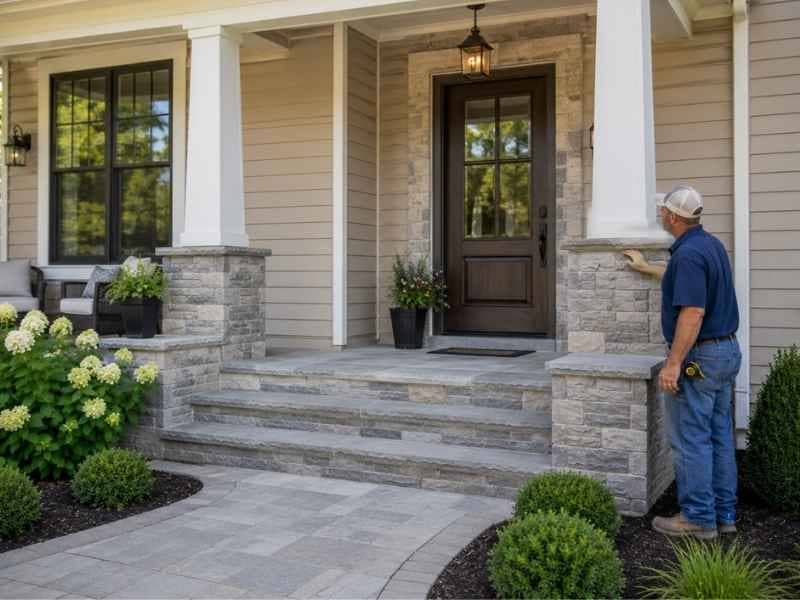
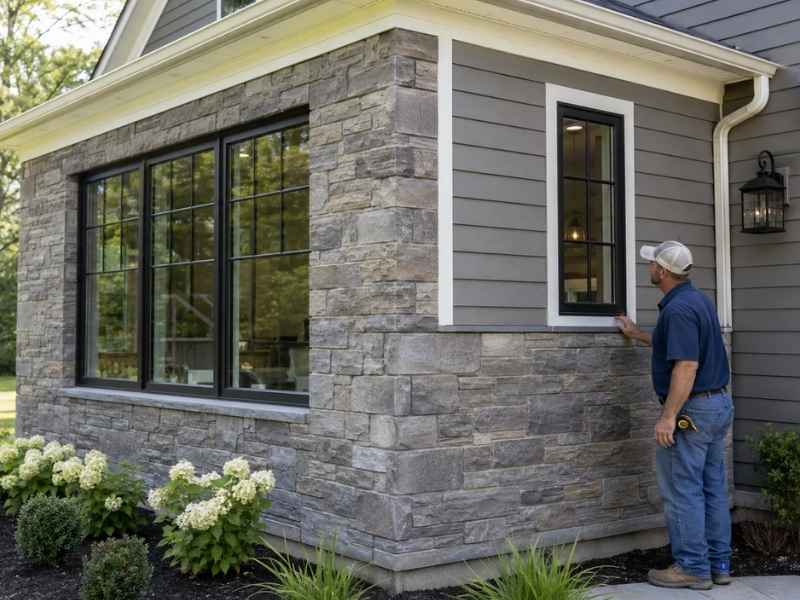
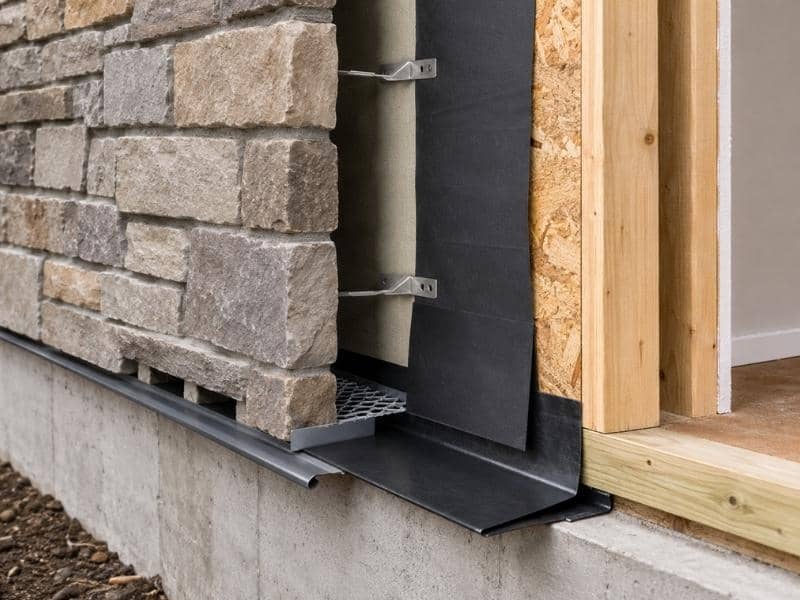
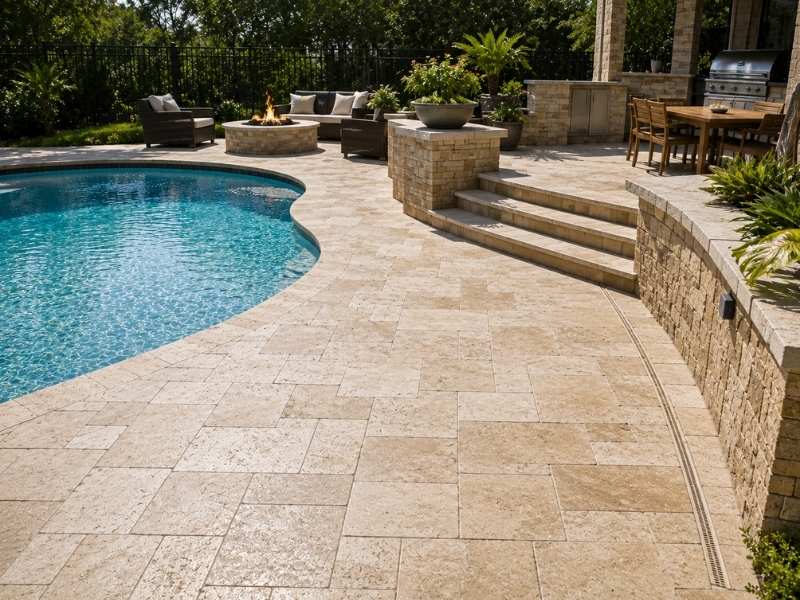
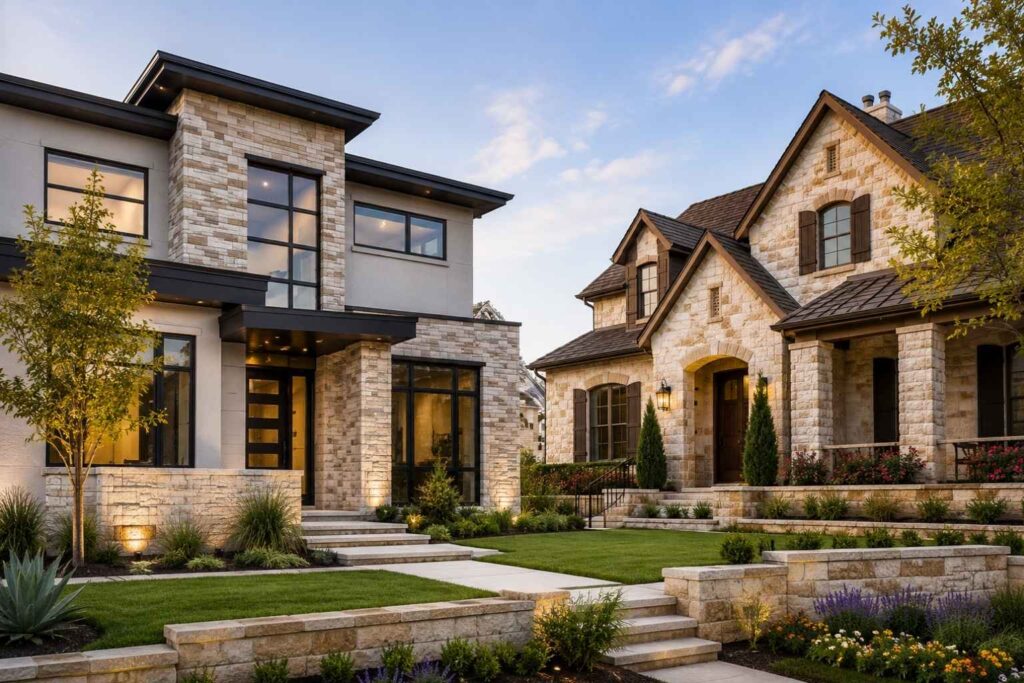
Stone Wall Caps That Protect the Top of Masonry Features
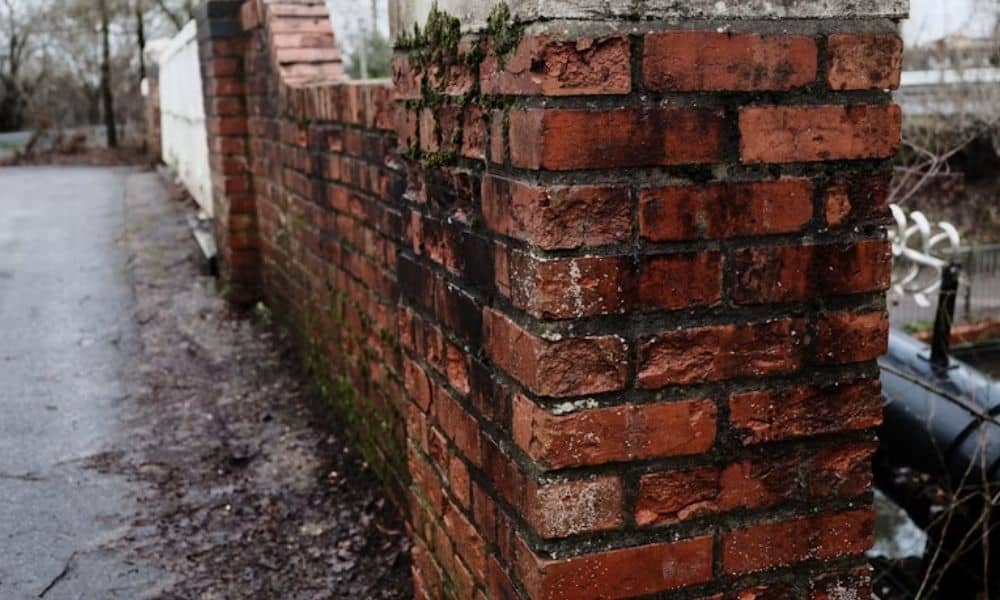
A stone wall can stand for decades, but the part that gives out first is almost always the top. In Frisco and across North Texas, that flat top surface takes the full beating of sun and hard rain all year long. A stone wall cap is the piece built to shield it. Set the right cap and the wall below stays dry and sound. Skip it or size it wrong and water starts working its way in from the top down.
Why the Top of a Stone Wall Is Especially Vulnerable
The top of a wall is the one surface that can’t shed water on its own. The face of the wall is vertical, so rain runs down and off it. The top is flat, so water lands and just sits there. It soaks into the joints and into the stone itself, then sinks deeper with every storm.
North Texas makes this harder. Summer sun bakes that top surface hour after hour. Then a heavy rain hits it flat and fast. On a rare cold night, trapped water freezes and pushes the stone apart from the inside. All of that wear starts at the top, which is why a cap matters. A cap does more than finish the wall for looks. It works like the wall’s roof and takes the weather so the stone below doesn’t have to.
How a Stone Wall Cap Directs Water Away From the Masonry
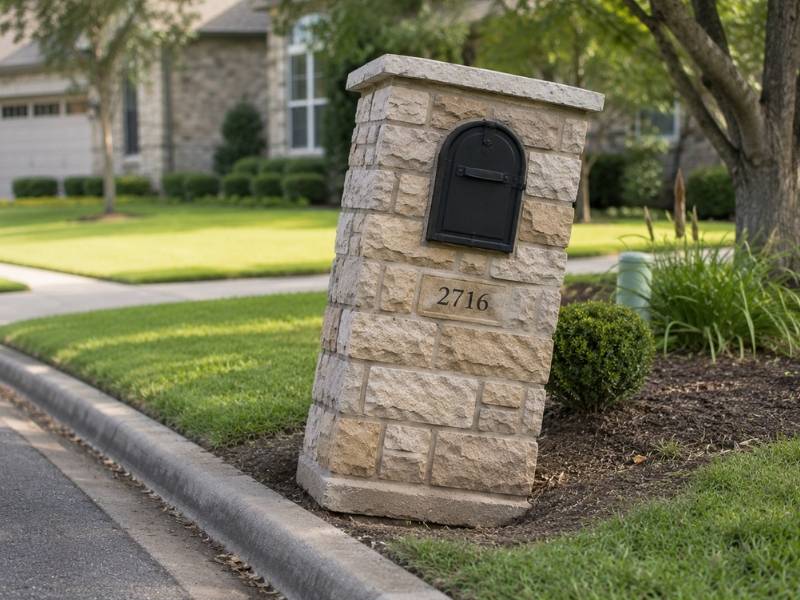
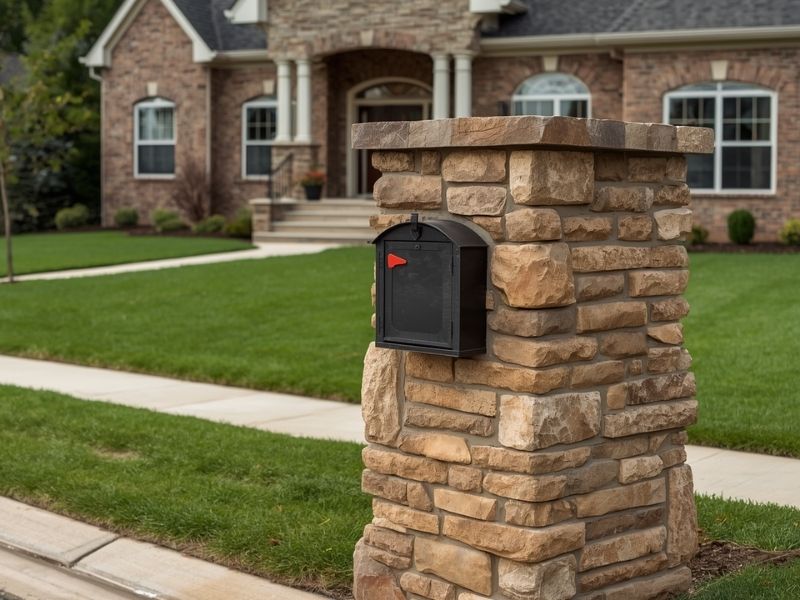
A good cap pushes water off the wall instead of letting it run down the face. It does this a few ways. First is overhang, where the cap sticks out past the wall on both sides. There’s also a drip edge, a small groove or lip cut under that overhang. And the top gets a slight slope so water rolls toward the front and leaves.
Water that runs down the face is the thing you want to stop. It stains the visible stone. It soaks the joints below. Over time it can freeze and chip the surface you paid good money for. The overhang and drip edge break that path so water drops straight to the ground and misses the wall. During one of North Texas’s fast, heavy downpours, that small detail moves a lot of water off the wall in a hurry.
Choosing Cap Stone Thickness, Width, and Edge Profile
Cap size should match the wall it sits on, not a standard piece pulled off a shelf. A tall or exposed wall needs a thicker cap that won’t crack under heat and weather. A short garden wall can take a thinner one. The cap also needs enough width to cover the full top of the wall plus that overhang on each face. Too narrow and part of the wall top stays open to the rain.
The edge shape matters too. An eased edge softens the square corner just a little and sheds water cleanly. A chiseled edge keeps a rough, natural look that suits rustic stone. A bullnose edge rounds the front over so runoff rolls off fast. Each one changes how water leaves and how the cap wears. Pick the profile for how the wall gets used and how exposed it is, not just for the look you liked in a photo.
Stone Wall Cap Materials for North Texas Outdoor Masonry
The best cap stone for North Texas handles heat, sheds water and matches the wall below. Limestone is popular here and looks right on most Texas walls, but it’s softer and soaks up more water, so it can stain and wear faster. A denser cut of limestone holds up better. Granite is very hard, takes on little water and shrugs off heat and stains, though it costs more and weighs a lot.
Heat is a real factor in this part of Texas. That top surface can get scorching in July, and softer stone reacts to that swing more than dense stone does. Staining is the other thing to watch. Sprinkler spray, hard water and iron inside some stone can leave rust marks and dark streaks. Pick a cap that resists all of that, and match its color and texture to the wall so the finished feature reads as one piece and not a patch job.
Small Cap Details That Can Extend the Life of a Stone Wall
The small work is what makes a capped wall last. The joints between cap pieces need to be tight and sealed so water can’t sit in the seam and seep down. The mortar bed under each cap should be full and even, with no hollow spots that hold water or let a piece rock loose. Every cap should sit level and in line so water runs the way it’s meant to.
A capped wall is easy to check once you know the signs. Walk the wall now and then and look for trouble:
- Cap pieces that rock or shift when you press on them
- Joints between caps that have opened up or cracked
- Stains or damp patches on the wall right under the cap edge
- Caps that have slid out of line or dropped lower than the rest
A little movement or one open joint is worth fixing early, before water gets behind the cap. For a prominent wall or entrance feature, it pays to have a mason look it over. A trained eye catches a failing bed or a bad joint before it turns into a wet, cracked wall.
Frequently Asked Questions
What does a stone wall cap actually do?
It covers and protects the flat top of the wall, the one spot rain can’t run off by itself. The cap sheds water past the wall face and keeps it out of the joints and the stone below. It also finishes the wall with a clean top edge. Think of it as a small roof for your wall.
How far should a wall cap hang over the wall?
Enough to throw water clear of the wall face, usually a small projection on each side with a drip edge underneath. The right amount depends on the wall’s height and how exposed it is. A taller or more open wall often needs a bit more overhang. Your mason can set the correct projection for your wall.
Is limestone or granite better for a cap in North Texas?
Both work, and the choice comes down to budget and wear. Limestone looks natural on Texas walls and costs less, but it’s softer and can stain, so ask for a dense cut. Granite resists heat, water and stains the best, but it’s heavier and pricier. Matching the wall below often makes the call.
Can I add a cap to a stone wall that’s already built?
Yes, as long as the top of the wall is sound and level enough to take one. A mason cleans and preps the top, lays a full mortar bed and sets the cap so it sheds water. If the wall top is already worn or uneven, that gets fixed first. Adding a cap later can add years to a wall that never had one.
How do I know if my wall cap needs repair?
Look for caps that rock, joints that have opened or cracked and damp or stained stone right below the cap line. A cap that has slipped out of place is another clear sign. Any of these means water is finding a way in. Catching it early keeps a small repair from turning into a rebuild.