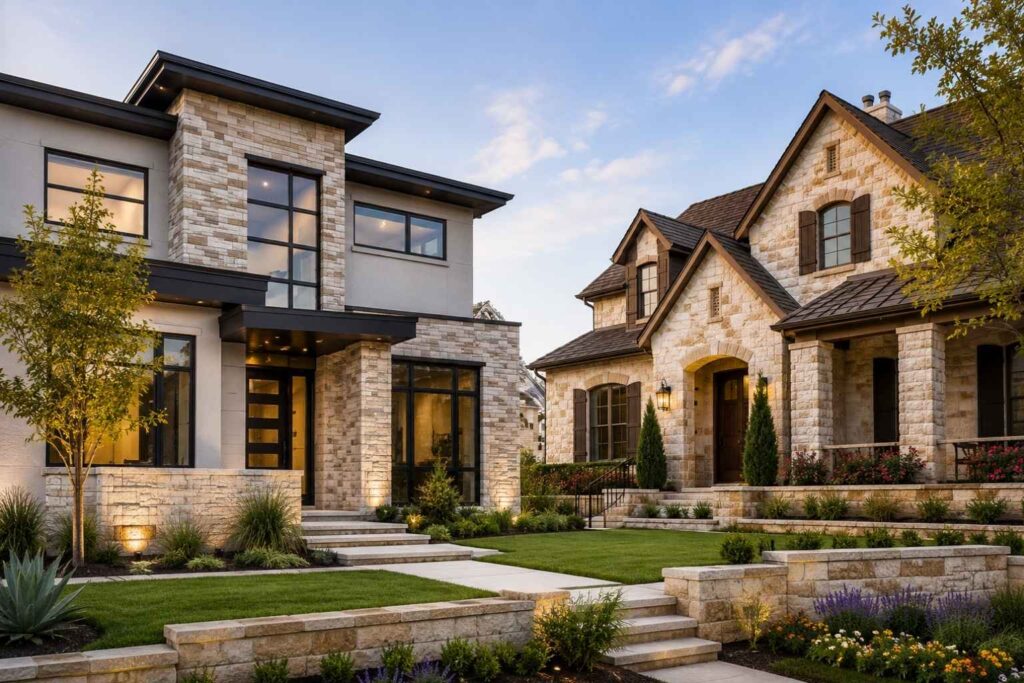
Stone masonry does something few materials can do. It makes a house look like it belongs to the land it sits on. Stone isn’t just a finish choice. It shapes how a home looks from the street. It shapes how the home ages over the years. It also shapes how the home fits in with the houses around it.
This article covers how stone masonry shapes a home’s look. It shows how to blend stone with modern design. And it covers how to use stone well, both as structure and as decoration.
How Stone Masonry Shapes Architectural Identity in Homes
A home’s identity starts with its materials. Stone carries more visual weight than siding, brick, or stucco. It signals that a home is built to last.
Here’s how stone shapes that identity:
- Texture and color change give a home a one-of-a-kind look. No two stones cut exactly the same.
- Heavy stone at the base of a home creates a solid, grounded feel. Lighter materials can’t match that feel.
- Stone details around doors and windows draw the eye. They show where the important architectural points are.
- The way stone catches light changes how a home looks throughout the day, from morning to evening.
Frisco has a lot of new construction near older, established neighborhoods. Stone masonry often bridges the gap between the new builds and the older homes nearby.
Blending Raw Stone Textures With Contemporary Home Design
Modern homes and raw stone might seem like an odd match. But they work well together when done with care.
Here are a few ways to blend the two:
- Pair rough-cut stone with clean, flat stucco or metal panels. This creates contrast instead of visual clutter.
- Use large stone pieces instead of small, busy patterns. Large pieces feel more modern.
- Keep stone to certain areas, like a fireplace wall or an entry feature. Don’t cover the whole front of the house.
- Pick one stone tone that matches the home’s other materials. Avoid mixing several competing colors.
The goal is balance. Too much raw texture can overwhelm a modern design. Too little loses the character stone is meant to add.
Regional Stone Masonry Styles That Influence Residential Design Choices
Stone styles change by region. Those regional habits still shape what homeowners expect today.
Here are a few styles that show up often in home design:
- Hill Country stone is common across Central Texas. It uses tan and cream limestone with a rugged, natural face.
- Fieldstone was popular in older East Coast homes. It uses uneven, rounded stones set with visible mortar lines.
- Ashlar stone is cut into rectangular blocks with tight joints. It gives a more formal, structured look.
- Dry-stack stone is laid without visible mortar. It creates a cleaner, more modern look.
Frisco mixes new development with Texas Hill Country style. Because of this, both rugged limestone looks and clean dry-stack styles show up often in home design requests.
Structural vs Decorative Stone Masonry Applications in Home Design
Stone plays two very different roles in home building. Mixing up the two can lead to costly mistakes.
Structural Stone Masonry
Structural stone actually carries weight. This includes:
- Foundation walls built from solid stone or stone-faced concrete block.
- Retaining walls that hold back soil on sloped lots.
- Load-bearing exterior walls in traditional stone homes.
These uses need engineering review. They also need proper footings and drainage planning behind the wall.
Decorative Stone Masonry
Decorative stone is a veneer. It gets applied over a wall that’s already doing the structural work. This includes:
- Thin stone veneer over a home’s outside wall.
- Stone accents around fireplaces, entries, or feature walls.
- Stone caps on columns or low garden walls.
Decorative stone is lighter. It installs faster. It also costs a lot less than full structural stone. But it still needs proper flashing and moisture barriers to hold up well over time.
Designing Visual Balance With Stone Masonry Across Exterior Surfaces
Stone works best with a clear plan. It shouldn’t get scattered across a home’s front without a reason.
Here are a few rules that keep stone balanced on a home’s exterior:
- Anchor stone at the base of the home. Let lighter materials carry the upper floors.
- Use stone to frame key features, like an entry. Don’t spread it evenly and lose its impact.
- Keep stone coverage steady on all visible sides. This stops the home from looking unfinished from certain angles.
- Match the mortar color to the stone tone. This avoids a busy, distracting grid pattern on the surface.
A home with stone placed with care looks intentional. A home with stone placed carelessly looks unfinished, even when the stone itself is high quality.
Frequently Asked Questions
Is stone veneer as strong as full structural stone?
Stone veneer is durable when installed correctly with proper backing and moisture protection, but it is not load-bearing like full structural stone masonry.
How much of a home’s exterior should use stone for a balanced look?
There is no fixed rule, but many designs use stone as an accent at the base, entry points, or key architectural features to maintain visual balance without overwhelming the façade.
Can stone masonry work on a modern minimalist home?
Yes. Modern designs often use large-format stone, neutral tones, and clean joint patterns to achieve a minimal, contemporary appearance.
Does stone masonry require more maintenance than brick or siding?
Stone masonry generally requires less maintenance than siding, but mortar joints should still be inspected periodically for cracking or weather-related wear.
What is the most common mistake homeowners make when choosing stone?
Using too many colors, textures, or stone types is a common mistake, as it creates visual clutter instead of a cohesive and unified architectural look.
