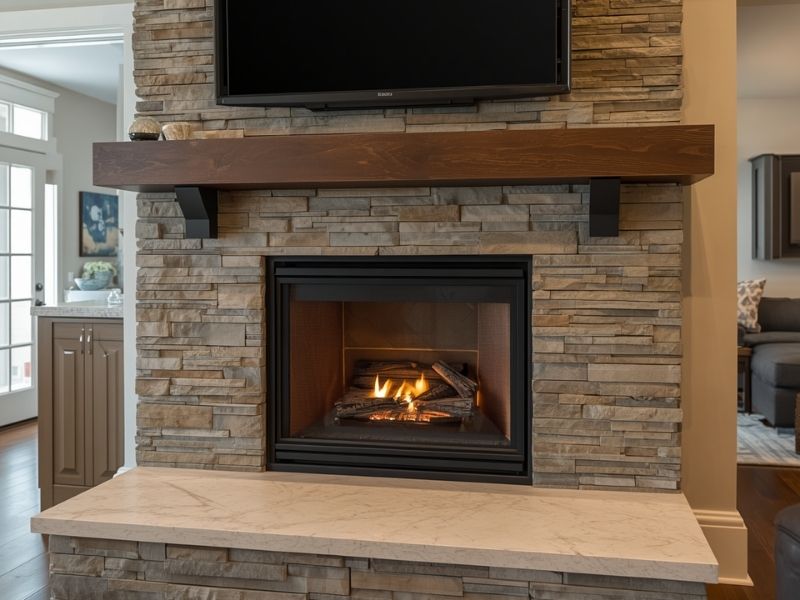
A fireplace without the right hearth looks unfinished, even if the firebox itself is beautiful. A stone hearth ties the whole feature together, giving it the weight and presence that makes a room feel complete.
For homeowners in Frisco planning a new build or a fireplace update, the hearth often gets less attention than it deserves during the design phase.
The right stone hearth depends on room style, fireplace size, and how the space gets used daily. A hearth that fits these details well makes the whole fireplace look intentional instead of an afterthought.
The Overlooked Slab That Ties the Whole Room Together
The hearth is the stone or masonry surface extending out from the base of the fireplace. It serves a real safety purpose, protecting the floor from heat and stray embers. It also plays a huge role in how finished the fireplace looks overall.
A fireplace with a small, plain hearth can look unbalanced next to a large stone surround. A hearth sized and styled to match the rest of the fireplace pulls the whole feature together instead of looking like two separate pieces.
Letting the Room Set the Tone for Stone Choice
Stone hearths come in a wide range of finishes, and the right choice depends heavily on the room around it.
For modern spaces, consider:
- Large format stone slabs with minimal seams
- Honed or matte finishes rather than heavily textured stone
- Simple, clean edge profiles without ornate detailing
For traditional or rustic spaces, consider:
- Natural fieldstone with varied texture and color
- Rougher cut edges that show the stone’s natural character
- Warmer tones that complement wood beams or exposed brick nearby
Picking a style that clashes with the room’s overall feel is one of the most common reasons a hearth looks out of place, even when the stone itself is high quality.
Deciding Between a Step Up and a Level Surface
One of the first decisions in hearth design is whether it sits flush with the floor or raises up as its own platform.
Flush hearths work well when:
- The room has limited space and a raised platform would feel bulky
- The homeowner wants a more minimal, streamlined look
- Furniture will sit close to the fireplace
Raised hearths work well when:
- The fireplace serves as a major focal point in a larger room
- Extra seating on the hearth’s edge is part of the design plan
- The homeowner wants more visual presence without expanding the fireplace’s width
Neither option is universally better. It depends on the room’s proportions and how the space actually gets used.
Getting the Scale Right So Nothing Looks Off
A hearth that’s too small looks stingy next to a large fireplace. One that’s too large can overwhelm a smaller room.
General guidelines to think through with your mason:
- The hearth should extend far enough from the firebox opening to meet local safety clearance requirements
- Width should generally match or slightly exceed the width of the fireplace surround above it
- Depth needs to account for how the space in front of the fireplace gets used, whether for seating, walking through, or keeping furniture at a distance
Getting these proportions right is often the difference between a hearth that looks planned and one that looks like it was added as an afterthought.
Squeezing More Use Out of the Stone Without Cluttering the Look
A stone hearth doesn’t have to be purely decorative. Several functional additions can blend into the design without disrupting the finished appearance.
Options worth considering:
- A slightly raised hearth edge that doubles as extra seating during gatherings
- Built-in storage niches nearby for firewood, styled to match the stone
- A wider hearth extension that provides a stable surface for holiday decorations or seasonal displays
The key is choosing additions that feel like part of the original design, not something bolted on afterward.
Small Choices That Quietly Undercut a Good Design
Some choices consistently make a hearth look less finished rather than more.
Watch out for:
- Mismatched stone between the hearth and the surround above it
- A hearth that’s noticeably thinner or thicker than the visual weight of the fireplace above
- Skipping proper edge detailing, leaving raw or unfinished looking cuts visible
- Choosing a finish that doesn’t hold up well to foot traffic if the hearth sits in a walkway
Avoiding these issues usually comes down to planning the hearth and the surround together, rather than treating them as separate decisions.
What to Bring to Your First Design Conversation
Bring these details to your first conversation with a mason:
- Photos or examples of stone finishes you like for the room’s style
- Whether you want a flush or raised hearth
- Any functional needs, like extra seating or firewood storage
- The general layout of furniture near the fireplace, so proportions work with the space
A mason who understands both the safety requirements and the visual goals can usually suggest adjustments that improve the design before construction even starts.
Final Questions Worth Settling Before Work Begins
- What stone finish will best match the room’s existing style?
- Should this hearth be flush or raised, given the room’s layout?
- What size and depth does local code require for safety clearance?
- Can we add functional features like seating or storage without disrupting the design?
- How will this stone hold up to daily foot traffic in this specific spot?
Frequently Asked Questions
How Much Does a Stone Hearth Cost Compared to the Rest of a Fireplace Project?
The cost of a stone hearth depends on the material, size, design, and whether it is flush or raised. In most fireplace projects, the hearth represents a smaller portion of the overall budget compared to the surround, firebox, and installation work.
Can an Existing Hearth Be Resurfaced Instead of Fully Replaced?
In some cases, yes. If the existing hearth structure is stable and undamaged, a mason may be able to install a new stone veneer or surface layer without removing the entire hearth.
Does Stone Type Affect Heat Performance Around a Fireplace?
Yes. Different stone materials have different heat resistance and durability characteristics. A qualified mason can recommend stone options and finishes that are suitable for areas exposed to heat near the firebox.
Is a Raised Stone Hearth More Difficult to Maintain Than a Flush Hearth?
Not necessarily. Raised hearths may require additional cleaning around edges and visible surfaces, while flush hearths integrate more closely with the surrounding floor and may be easier to clean with regular maintenance.
Can Different Stone Types Be Combined in a Custom Hearth Design?
Yes. Combining stone types can create a unique layered appearance, but the materials should be selected carefully to ensure they complement each other in color, texture, and overall fireplace design.
