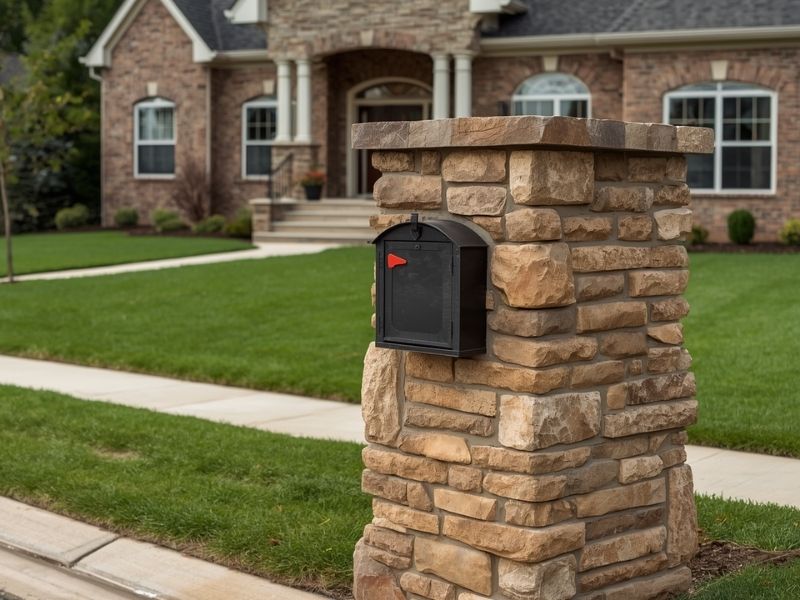
A stone mailbox does more than hold your letters. It sets the tone for your whole front yard before anyone even reaches your door. A flimsy metal post looks tired fast. A well built stone mailbox can last decades and still look sharp.
Here is the real issue most homeowners run into. They pick a design based on looks alone, then find out later it cracks, leans, or clashes with the house once it is built. A good stone mailbox needs to match your home and survive the weather in Frisco.
The best stone mailbox designs balance good looks with real durability. Get both right, and it becomes a small feature that adds lasting value to your property.
Why Stone Beats Other Mailbox Materials
Wood rots. Metal dents and rusts. Brick alone can look plain without the right accents. Stone holds up to sun, wind, and the heavy rain that hits North Texas a few times a year.
A stone mailbox also needs almost no upkeep. No painting. No sealing every year. Just an occasional rinse to keep dust and pollen off the surface.
What Makes Stone Last Longer Than Brick or Wood
Stone resists moisture better than wood, which means less risk of rot or insect damage over time. It also holds its color far longer than painted brick or wood posts, which fade and chip within a few years.
Popular Stone Mailbox Styles That Fit Different Home Types
Not every stone style matches every house. Picking one that fits your home’s look keeps the whole yard feeling put together instead of mismatched.
Rustic Fieldstone Design
Fieldstone gives a natural, uneven look that works well with country style homes or properties with a lot of landscaping. The rough texture stands out without needing anything fancy around it.
Clean Cut Limestone Design
Limestone blocks with sharp, even edges suit modern or traditional brick homes. This style looks tidy and matches well with homes that already use limestone accents on the exterior.
Mixed Stone and Brick Design
Combining stone with a strip of matching brick ties the mailbox directly to the house. This works especially well if your home already has brick as the main exterior material.
Stacked Stone Column Design
A tall, narrow stacked stone column gives a more formal look. This style suits larger front yards where the mailbox needs to hold its own visually from a distance.
Design Choices That Affect How Long It Lasts
Some choices matter more for durability than looks. Skipping these steps is where most stone mailboxes start failing within a few years.
A Solid Concrete Footing
Every stone mailbox needs a footing set below the frost line, even in a place like Frisco where freezing is less common than up north. A shallow footing lets the whole structure shift and crack over time.
Proper Mortar Joints
Wide, sloppy mortar joints trap water and crack faster in freeze and thaw cycles. Tight, even joints shed water instead of holding onto it.
A Sealed Cap Stone
The top of the mailbox needs a cap stone that sheds water away from the structure. Without one, water seeps down into the stone and mortar, weakening it from the inside out.
Reinforced Mailbox Post Inside the Stone
Many stone mailboxes fail because the metal post holding the actual mailbox rusts or bends inside the stone shell. Using a rust resistant post, and securing it properly before the stone gets built around it, prevents this common failure point.
Local Factors That Affect Stone Mailbox Durability in Frisco
Frisco sees hot summers, occasional hard freezes, and heavy spring storms. Each of these puts stress on an outdoor structure over time.
Heat and UV Exposure
Long stretches of intense summer sun can fade certain stone colors faster than others. Lighter limestone tends to hold its color better under heavy sun than darker sandstone varieties.
Sudden Freeze and Thaw Cycles
Even a handful of freezing nights each winter can cause water trapped in stone or mortar to expand and crack the surface. A solid footing and tight mortar joints protect against this.
Heavy Rain and Drainage
Without proper grading around the base, water can pool at the bottom of a stone mailbox and slowly weaken the footing. Sloping the ground slightly away from the base helps water drain instead of collecting.
Questions to Ask Before Building a Stone Mailbox
A few questions upfront can save you a rebuild a few years down the road.
- Does the design include a footing set below typical frost depth for this area?
- What kind of cap stone will be used, and does it fully shed water?
- Is the mailbox post inside rust resistant, and is it secured before the stone goes up?
- Does the stone style match the home’s existing exterior materials?
Getting clear answers before construction starts means fewer surprises and a mailbox that holds up for years, not just for the first season.
Frequently Asked Questions
Why Does a Stone Mailbox Need a Concrete Footing?
A concrete footing provides stability and helps prevent shifting, cracking, or leaning over time. Without a properly designed foundation, soil movement and moisture changes can weaken the structure.
Which Stone Type Works Best for Mailboxes in Hot Climates?
Stone selection matters in areas with intense sun exposure. Lighter-colored materials such as limestone often resist heat absorption and fading better than darker stones, helping maintain appearance over time.
Can a Stone Mailbox Be Designed to Match a Brick Home?
Yes. Stone mailboxes can incorporate brick accents, matching colors, or complementary masonry details to create a cohesive connection with the home’s exterior design.
How Much Maintenance Does a Stone Mailbox Require?
Stone mailboxes typically require minimal maintenance. Regular cleaning with water to remove dirt, dust, and pollen is usually sufficient, and stone does not require frequent repainting like some other materials.
What Causes Stone Mailboxes to Crack or Fail Prematurely?
Common causes include inadequate footing depth, improper mortar joints, and missing or poorly installed cap stones. These issues can allow water intrusion and increase damage from weather cycles over time.
