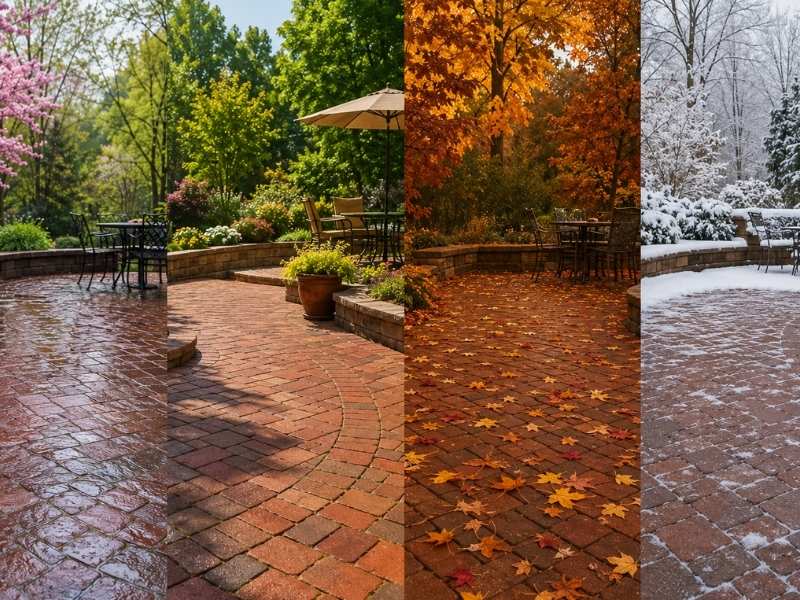
Your brick patio moves every single day, and you’ll never see it happen. It swells in July. It shrinks in January. The ground beneath it does the same thing on its own schedule, and the two rarely agree. Watch the right things at the right time of year and you’ll catch problems while they still cost twenty dollars.
The soil is running the show
Brick is stable. The dirt under it is anything but. Proper brick patio installation starts with a stable base and good drainage, helping the surface perform better as soil conditions change over time. Clay soil swells when it takes on water and shrinks when it dries out, and that movement lifts and drops whatever sits on top. A wet spring followed by a dry August is a full cycle of up and down.
You can’t stop that. What you can do is control how much water reaches the soil and how fast it leaves. Every seasonal habit below traces back to that one idea. Keep the moisture steady and the patio stays put.
Spring: water finds the weak spot
Rain is the first test each year. Heavy runoff pulls joint sand out of the seams, and once a joint empties, water gets deeper into the setting bed. That’s a small problem in March and a real one by fall.
Look at your patio during a storm, not after one. Water should run off the surface and away from the house within a few feet. If it pools, sheets toward a wall or cuts a channel through the joints, you’ve found the thing to fix.
What spring actually asks of you
Sweep the joints and see what’s missing. Refill any seam you can push a finger into, and use polymeric sand if the patio was built for it. Clear the downspout that dumps a roof’s worth of water onto one corner, because that corner will fail first.
Weeds show up now too. They grow in the joint sand, not through the brick, so weeds are a signal that your joints are open. Pull them and refill rather than spraying and forgetting.
Summer: heat pushes and the sun fades
Brick expands when it heats up. A wide patio in full sun grows a small amount across its width, and it has to push somewhere. Tight edges and a hard wall on one side turn that push into a lifted or chipped brick.
Heat also bakes the color. Red brick holds up well, but darker units and any pigmented jointing will lighten over a few hard summers. That’s cosmetic and it’s worth knowing before you blame the mason.
Watch for the dry-out sag. Late summer pulls water out of clay soil and the ground shrinks away, so a patio that was flat in May can develop a low spot in September. Note where it drops. That low spot will tell you where water has been collecting all year.
Fall: the season everyone skips
Leaves look harmless. Wet leaves left on brick for weeks release tannins that stain the surface a rusty brown, and that stain sinks in. Blow them off before the first long rain and you skip the whole problem.
Debris also clogs drainage. A patio edge packed with leaf mulch turns into a small dam, and water backs up onto the surface instead of running off. Clear the perimeter, not just the middle.
Fall is the smart window for sealing if you seal at all. The surface is dry, the temperatures are mild and the patio goes into winter protected. Sealing a damp patio traps moisture underneath and creates a cloudy mess.
Winter: freeze, thaw and the salt mistake
Water in a joint or a pore expands when it freezes. That expansion breaks the face off the brick over repeated cycles, and the damage is called spalling. Mixed climates do more of this damage than cold ones, because they freeze and thaw over and over instead of staying frozen.
De-icing salt makes it worse. Rock salt drives more freeze-thaw cycles and attacks the brick face, and it’s the fastest way to ruin a good patio. Use sand for traction instead, then sweep it up in spring.
Metal shovels are the other winter mistake. They chip edges and scar the surface, and the damage is permanent. Plastic works fine.
Reading the damage
Not every crack means the sky is falling. A single hairline in one brick is usually the brick, and it’s cosmetic. A line of cracks running across several bricks in a row means something under the patio moved, and that’s worth a call.
Spalled faces mean water got in and froze. Look for the source before you replace the unit, because a new brick in a wet spot spalls too. The pattern tells you more than any single brick does.
A four-season check that takes ten minutes
- Spring: watch it rain, refill open joints, aim downspouts away from the slab
- Summer: mark any new low spot, check the edges for lifted or chipped brick
- Fall: clear leaves before the first soaking rain, open up the drainage at the perimeter
- Winter: no rock salt, no metal shovels, sand for traction only
- Any season: photograph cracks with a coin next to them and compare year over year
That last one is the trick nobody uses. A photo log turns “I think it’s worse” into a fact, and it’s the difference between a repair and a rebuild.
Frequently Asked Questions
Why is my brick patio uneven after a wet season?
Clay soil expands when it absorbs water and shrinks as it dries, causing the patio surface above it to rise and settle. A wet spring followed by a dry summer often repeats this cycle each year. If the same low spots appear seasonally, poor drainage is usually the underlying cause rather than a failed patio.
Can weather crack brick patio pavers?
Yes. Water can enter the brick or mortar joints, then freeze and expand during cold weather. Repeated freeze-thaw cycles may cause the surface of the brick to break apart, a condition known as spalling. Areas with fluctuating winter temperatures are especially vulnerable.
Is rock salt safe on a brick patio?
No. Rock salt can accelerate damage by increasing freeze-thaw activity and breaking down the surface of brick pavers. Sand is a safer option for improving traction during icy conditions, and using a plastic shovel instead of a metal one helps prevent chipped edges.
When is the best time to seal a brick patio?
Fall is often the ideal time because mild temperatures and dry conditions allow the sealer to cure properly before winter arrives. Always make sure the patio is completely dry before sealing, as trapped moisture can reduce the sealer’s performance.
How often should joint sand be replaced?
The frequency depends on rainfall, drainage, and overall patio use, but many brick patios benefit from replacing joint sand each spring. Maintaining full joints helps prevent water infiltration, weed growth, and movement of the pavers over time.
